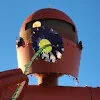
Antlers and Socks: The Story of Deer Dancer
I knew there was a reason I held on to this one. When I returned to the clay in January, I had fresh memories of the holiday season in the Pueblo. During the winter in Cochiti, there are many dances and ceremonies. The one that has the lasting memories for me is the deer dance.
This dance is a tradition that honors deer, their spirit, and their role in our culture. Participants wear complex headpieces made with real antlers, eagle feathers and juniper branches, along with an equally elaborate dance costume. During the dance the participants crouch down on wooden sticks, mimicking the stance and gait of a deer. It is a vigorous and demanding pace; at the same time it is fun and exhilarating. The deer often appear alongside buffalo dancers and other animals, including ram, antelope, and elk. During Christmas, the nature of the deer dancing in the Buffalo Dance takes a more festive tone, and children are encouraged to participate.
My story started when I was 7. With my little 4-point rack and evergreens poking my face, my father dressed me in the traditional leggings and moccasins. I quickly adapted to the style and intensity. I could see my breath in front of me as I adjusted to the cold winter air. It didn’t matter that I was one step behind everyone else, I fell in love and immediately sensed the rhythms in my heart. I was partnered with another boy my age, and although we were by far the smallest children in the dance group, we meandered and lumbered around the plaza, imagining ourselves as monstrous, 12-point bucks.
As the dance neared its conclusion, we found ourselves the recipients of gifts of candy canes, sodas and socks by our mothers and aunties. They were placed carefully on our horns, and I was so proud. We strutted around with our hard-earned prizes jiggling around on our headpieces. This unexpected haul made me love this dance even more. I had so much energy I thought I could dance all day. Of course, the attraction of gifts brought me back to dance again, and again. When I became a teenager, I began to understand why we performed this dance. As I matured, I even began to compose my own songs. I started to see that these rites not only acknowledged these spirits, but also the ancestral places where they came from, the role of hunting in our ways of life, and sending the animal spirits back to their homes. I continued to take part as a deer dancer until my early adulthood. As my knees and back aged, it became more and more difficult to perform it as I once did. Afterwards, it became a distant memory. I permanently retired into the choir, and I never thought I would live those lovely core moments again.
Life has a way of returning you to the beginning. I became a parent when my first son arrived in 2007, followed by 2 more boys in short order. Aside from all the other duties of being a father and husband, I was overjoyed when I realized the possibility of them partaking in the deer dance. I swore up and down that I would have them ready as soon as they could walk, and I did. When they reached the ripe old age of 3, I prepared their helmets, painted their faces black, and tied their feathers with the biggest grin. When it was time to dance, they were off and running, tiny and adorable. Sure, they didn’t get the timing down right, and it didn’t matter. They loved it, and I loved being every part of their experiences. My boys continue to partake to this day, and it is wonderful to see. The deer dance will always have a deep place in my heart, and I have realized it is an essential experience to a pueblo person. It serves as an introduction for a child into the larger traditional world, and it blossoms into complete understanding as they mature. Deer Dancer is all of these things. It was there all along with me as a guide, when I grew from a Cochiti boy into a man, and then again as a father with my own little herd of deer.